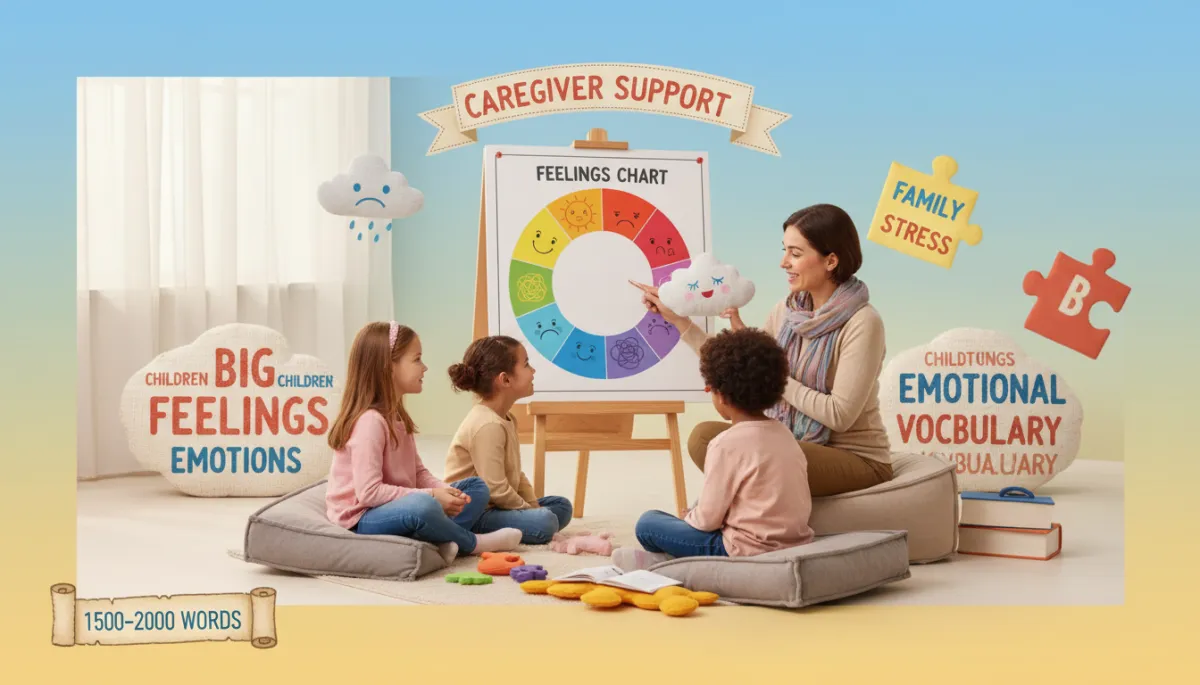
How to Help Kids Name Big Feelings During Family Stress
Parenting, Big Feelings, Children Emotions, Family Stress
How to Help Kids Name Big Feelings During Family Stress
When life gets bumpy for your family, your child’s inner world can feel just as stormy. Helping kids name their Big Feelings during times of Family Stress is one of the most powerful gifts you can offer as a caregiver. In this guide, we’ll explore simple, friendly ways to build your child’s Emotional Vocabulary, use tools like a Feelings Chart, and strengthen Caregiver Support so everyone feels a little safer and more connected.
Why Naming Big Feelings Matters So Much
During Family Stress—like a move, a new sibling, money worries, illness, or separation—kids often experience intense Children Emotions they don’t yet understand. Their bodies feel tight, their hearts race, and their thoughts get jumbled. Without words, those Big Feelings can come out as meltdowns, clinginess, backtalk, or shutting down completely.
When you help your child put words to what’s happening inside—“You’re feeling worried,” “That was really disappointing,” “You seem angry and hurt”—you’re doing more than just talking. You’re helping their brain organize the chaos. This is the heart of building an Emotional Vocabulary: giving kids the language to match their inner experience so those feelings feel less scary and overwhelming.
📌 Key Takeaway: When kids can name their Big Feelings, they can start to tame them. Words turn invisible storms into something you can face together.
Understanding Children Emotions During Family Stress
Adults usually know when life is stressful: the bills, the appointments, the arguments, the big decisions. Kids may not know the details, but they feel the tension in the air. Their Children Emotions are like little radar systems, picking up on changes in routines, tones of voice, and facial expressions long before anyone explains what’s going on.
A preschooler might become more clingy or have more tantrums because their Big Feelings have nowhere to go yet.
A school-age child might complain of stomachaches or headaches, or suddenly “forget” how to do things they used to manage easily.
A tween might act extra grumpy, roll their eyes, or retreat to their room, even if they can’t explain why they feel so on edge.
These behaviors are not “bad,” they’re signals. They’re your child’s way of telling you, “Something is too big inside me.” Recognizing that these reactions are about Family Stress and not about your child being difficult helps you respond with curiosity and Caregiver Support instead of frustration or shame.

Noticing small signs of worry is the first step to supporting children emotions.
Building Emotional Vocabulary: Words for Big Feelings
A rich Emotional Vocabulary is like a feelings toolbox. The more words your child has, the more precisely they can describe what’s going on—“I’m nervous,” “I’m frustrated,” “I feel left out,” instead of just “I’m mad.” This is especially important when Family Stress is high, because many feelings pile on top of each other at once.
You can start with the basics—happy, sad, mad, scared—and gradually add more nuanced words as your child grows. Here are some helpful groups of words to introduce over time:
Worry words: nervous, anxious, unsure, uneasy, worried, afraid
Anger words: annoyed, frustrated, mad, furious, irritated, resentful
Sadness words: disappointed, lonely, hurt, gloomy, heartbroken, blue
Overwhelm words: stressed, overloaded, confused, mixed up, exhausted
💡 Pro Tip: Use everyday moments—like story time, TV shows, or playground conflicts—to point out and name Children Emotions. “She looks disappointed,” or “He seems really proud of himself!”
Using a Feelings Chart as a Visual Anchor
One of the most practical tools for helping kids name Big Feelings is a simple Feelings Chart. Think of it as a visual menu of Children Emotions that kids can point to when words feel hard to find. A chart might include faces showing different feelings, color-coded zones, or emojis paired with emotion words.
During Family Stress, a Feelings Chart can become a safe, predictable tool you return to again and again. Instead of asking, “What’s wrong?”—which can feel overwhelming—you might say, “Can you show me on the chart how you’re feeling right now?” This invites sharing without pressure and gives your child a sense of control in a time that might feel out of control.
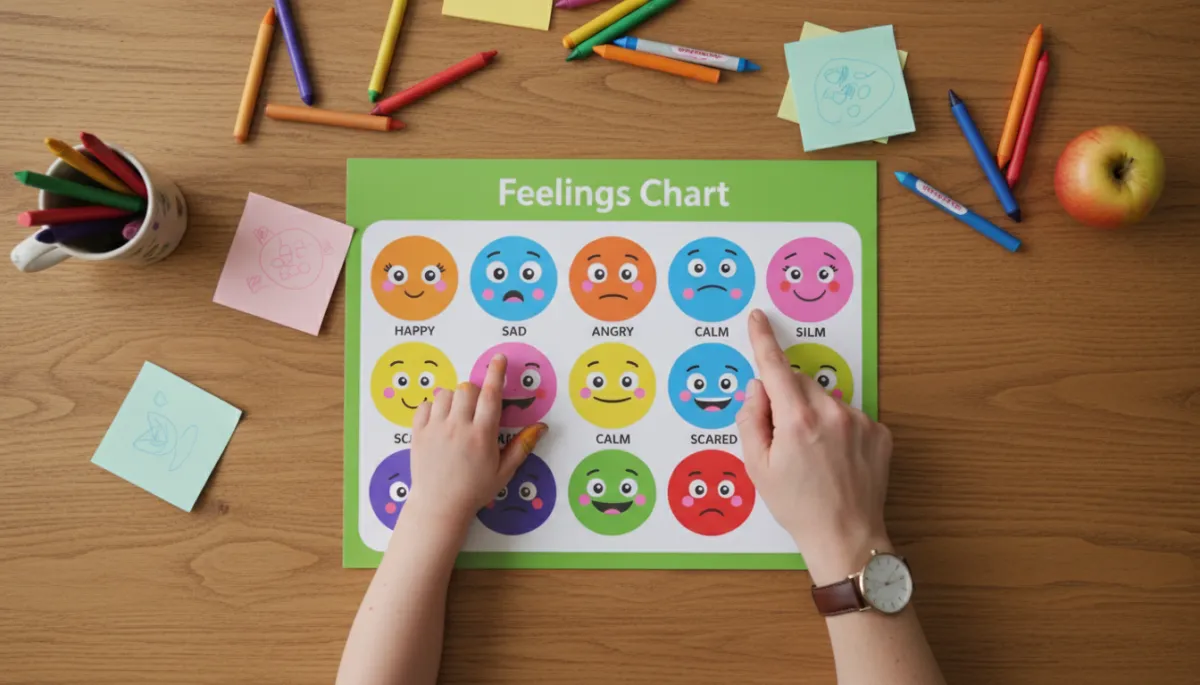
A feelings chart turns vague big feelings into concrete, shareable words.
Making Your Own Feelings Chart at Home
You don’t need anything fancy. Grab paper, markers, and your creativity. Together with your child, draw faces and label them with emotion words. Let your child choose colors and help decide which Big Feelings to include. This co-creation process is itself a gentle form of Caregiver Support, because you’re sending the message, “Your feelings matter enough to put on paper.”
For younger kids, stick with 4–6 basic feelings and big, clear drawings.
For older kids, expand your Emotional Vocabulary with more specific words and add a “mixed feelings” section.
💡 Pro Tip: Hang your Feelings Chart where everyone can see it—on the fridge, a bedroom door, or a wall near the family calendar—so it becomes part of daily life, not just something you pull out during a meltdown.
Scripts You Can Use to Help Kids Name Big Feelings
In stressful moments, it’s easy to feel tongue-tied yourself. Having a few go-to phrases ready can make Caregiver Support feel more doable. Here are simple scripts you can adapt to your family’s voice:
1. Noticing and Guessing Feelings
“I see your fists are tight and your face is scrunched. I wonder if you’re feeling really angry or frustrated right now. Does that sound right, or is it something else?”
2. Connecting Feelings to Events
“Ever since we talked about moving houses, I’ve noticed more tears at bedtime. I’m guessing you might be feeling worried or sad about the changes. Which word fits best for you?”
3. Normalizing Big Feelings
“Lots of kids—and grown-ups—feel mixed-up when there’s Family Stress. It makes sense that you have a lot of Big Feelings right now. None of your feelings are wrong.”
4. Inviting the Feelings Chart In
“Sometimes it’s hard to say the feeling out loud. Want to come over to the Feelings Chart with me and just point to what feels closest?”

Gentle, simple scripts help caregivers turn stressful moments into connection.
Caregiver Support: Regulating Yourself So You Can Co-Regulate Them
It’s hard to help a child calm their Big Feelings when your own are boiling over. That’s why Caregiver Support—for yourself—is a crucial part of supporting Children Emotions. You are your child’s emotional anchor, especially during Family Stress, and anchors need care too.
Pause before responding. Even one slow breath can shift you from reacting to responding. Try silently telling yourself, “My child is having a hard time, not giving me a hard time.”
Use your own emotional words. Say, “I’m feeling stressed too, so I’m going to take a deep breath,” modeling healthy Emotional Vocabulary in real time.
Reach out for support. Talk with friends, family, or professionals about your worries. The more supported you feel, the more grounded you can be for your child.
📌 Key Takeaway: Supporting Children Emotions starts with caring for your own. You don’t have to be perfectly calm; you just have to be willing to notice your state and gently steer yourself back toward steady.
Everyday Routines That Make Space for Feelings
You don’t have to wait for a meltdown to talk about Big Feelings. In fact, it’s often easier to build Emotional Vocabulary during calm, ordinary moments. These small, consistent check-ins create a foundation of trust that makes it safer to share during bigger waves of Family Stress.
Feelings at Breakfast or Bedtime
Try a simple daily ritual: “What’s one feeling you had today?” You can go first: “I felt proud when I finished a hard task,” or “I felt worried when I got that phone call.” Over time, this normalizes talking about Children Emotions and grown-up emotions alike.
Color Zones Check-In
For younger kids, you might use simple color zones alongside your Feelings Chart: green for calm, yellow for wiggly or excited, blue for sad or tired, red for very upset. Ask, “What color zone are you in right now?” Then you can follow up with more specific Emotional Vocabulary when they’re ready.

Simple daily check-ins make talking about big feelings feel normal and safe.
Handling Tough Moments: What to Do When Feelings Explode
Even with the best tools and intentions, there will be times when Big Feelings spill over. Maybe your child slams a door, screams, or refuses to talk. Maybe they burst into tears over something that seems tiny on the surface. These are the moments when your Caregiver Support matters most—and when it can feel hardest to give.
First, ensure safety. Gently block hitting or throwing, move breakable items, and keep your own body calm and steady.
Then, connect before correcting. “You’re having such a hard time right now. I’m here with you. Your feelings are okay; we just have to keep bodies safe.”
Offer words, but don’t force talking. “I’m guessing you might be feeling really disappointed and angry. If I’m wrong, you can tell me later.”
Once everyone is calmer, you can circle back to your Feelings Chart or your shared Emotional Vocabulary: “Looking back, which word fits best for how you felt when your game turned off?” This reflection helps your child connect cause, feeling, and reaction—skills that will serve them for years to come.
💡 Pro Tip: You don’t have to get the feeling “right” every time. Just your effort to notice and name Children Emotions shows your child that their inner world matters to you.
When to Seek Extra Help for Big Feelings
Sometimes Family Stress is especially heavy—like a major loss, ongoing conflict, or serious illness—and your child’s Big Feelings feel bigger than what you can handle alone. Reaching out for extra support is a sign of strength, not failure. Therapists, school counselors, and pediatricians can help your child expand their Emotional Vocabulary and learn new coping skills, while also offering you added Caregiver Support.
Changes in sleep, appetite, or energy that last for weeks
Frequent stomachaches or headaches without a clear medical cause
Withdrawing from friends or activities they used to enjoy
Talk about not wanting to be here, hurting themselves, or feeling hopeless
You know your child best. If something feels “off” in your gut, trust that instinct and reach out. You don’t have to carry your child’s Big Feelings alone, especially in seasons of intense Family Stress.
Bringing It All Together: A Kinder Way to Weather Family Stress
Helping kids name Big Feelings during Family Stress isn’t about getting every word perfect or preventing every meltdown. It’s about slowly, steadily building a shared language of Children Emotions, using tools like a colorful Feelings Chart, and offering warm, steady Caregiver Support—even when you’re feeling wobbly yourself.
As you practice, you’ll likely notice small but meaningful shifts: your child pointing to a feeling instead of hitting, saying “I’m nervous” before a big day, or checking in with you about how you’re doing. These moments are signs that your efforts are taking root. You’re not just surviving a hard season; you’re helping your child grow lifelong emotional skills they’ll carry into friendships, school, and eventually their own families.
And if you’re wondering whether this long, friendly guide really needed to be 1500-2000 words, remember: big topics deserve spacious conversations. Your child’s inner world is worth the time, the patience, and the gentle practice it takes to turn swirling sensations into shared, speakable feelings. One word at a time, one chart at a time, one hug at a time—you’re helping your child feel seen, understood, and less alone in their Big Feelings.
