
When Kids Feel Left Out Because Adults Are Busy Caregiving
Caregiving, Parenting, Family Connection
When Grown-Ups Are Busy Caregiving: Helping Children Feel Seen, Loved, and Included
Caregiving seasons can stretch your time, energy, and emotions thin. While you’re doing your best to care for an aging parent, a partner with health challenges, or another loved one, the children in your life can quietly start to feel left out. This friendly guide explores common caregiving challenges, why children feeling neglected is so painful for everyone, and how small, focused moments—sometimes just ten minutes at a time—can bring your family back to center. You’ll also see how the KidsCaregiver Collection/Series and Companion can support you with clarity, confidence, and purpose while you care for both your loved one and your kids.
The Hidden Heartache of Caregiving Challenges at Home
Caregiving challenges rarely show up alone. They bring a whole crowd of companions: exhaustion, worry about the future, financial stress, medical appointments, and constant mental to-do lists. You may feel like you’re always “on,” moving from one need to the next without much space to breathe, let alone sit down for a board game or bedtime story. If that sounds familiar, you’re not alone—and you’re not failing. You’re in a demanding season that would stretch anyone thin.
In the middle of all this, it’s easy to assume kids are “fine” because they’re playing in the next room, watching a show, or seeming extra independent. But underneath, many children are quietly navigating big feelings: confusion, jealousy, fear, and sometimes a deep sense of being pushed to the side. They may not have the words to say, “I feel like you love Grandma more than me right now,” but their behavior often tells the story—clinginess, tantrums, acting out at school, or becoming unusually quiet and withdrawn. These are all signs of children feeling neglected, even when you love them fiercely and are doing everything you can.
💡 Gentle Reminder: Feeling stretched thin does not mean you’re a bad parent or caregiver. It simply means you need support—for you and for your kids.
How Children Feeling Neglected Shows Up in Everyday Life
Children don’t usually come to you and say, “I’m experiencing complicated emotions about the caregiving dynamics in our home.” Instead, they send signals through their behavior. When caregiving dominates your schedule, kids may begin to interpret your busyness as a reflection of their worth, even though that’s the last thing you intend. Understanding these signals can help you respond with compassion instead of frustration or guilt.
Clinginess and regression: A child who suddenly wants to sleep in your bed again, forgets how to do things they used to manage, or cries when you leave the room may be asking, “Am I still important to you?”
Acting out and anger: Outbursts, backtalk, or “attention-seeking” behaviors are often really connection-seeking. Your child might not know how to say, “I miss you,” so they show it through big reactions instead.
Quiet withdrawal: Some kids go the opposite direction. They become overly helpful, independent, or quiet because they don’t want to “add to your stress.” Inside, though, they may feel lonely or invisible.
School and sleep struggles: Trouble concentrating at school, new worries at night, or difficulty falling asleep can be signs that your child is carrying more emotional weight than they know how to express.
These behaviors can be especially hard to handle when you’re already drained from caregiving challenges. It’s natural to think, “I’m doing all of this for our family—why are they making it harder?” But when we reframe these behaviors as a request for emotional support for children, it becomes easier to respond with empathy instead of frustration. The goal isn’t perfection; it’s noticing the signals and gently moving toward reconnection with kids when you can.
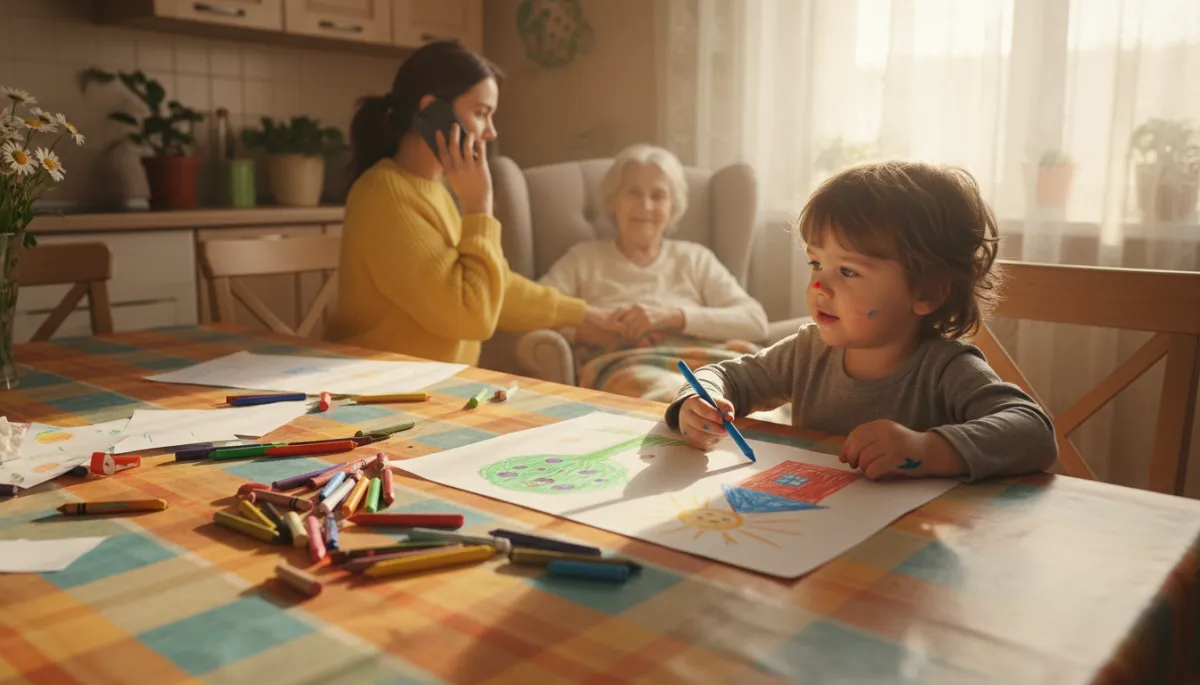
Small changes in behavior are often a child’s way of saying, “Please notice me.”
Why Small, Focused Moments Matter More Than Endless Hours
When you’re pulled in many directions, it’s easy to fall into all-or-nothing thinking: “If I can’t spend a whole afternoon with my child, what’s the point?” The truth is, your kids don’t need you for hours on end every day to feel loved and secure. What they need most is small, focused moments when you are truly present—no phone in your hand, no half-listening while you tidy up, just you and them together. Ten minutes of quality time can be surprisingly powerful when it becomes a consistent ritual instead of a rare surprise.
Think of these ten-minute pockets as emotional vitamins. They don’t fix everything, but they strengthen your child’s sense of safety and connection over time. When you say, “I have ten minutes before I need to help Grandpa. How would you like to spend them together?” you send a strong, reassuring message: You matter. I see you. I’m choosing to be with you right now. That moment of choice is what children remember, even more than the activity you do together.
💡 Try This: Set a timer for ten minutes, put your phone in another room, and let your child be the “boss” of what you do together—drawing, building, reading, or just talking. The structure helps you show up fully, even on busy days.
The Power of Small Rituals and Meaningful Family Time
In caregiving seasons, big family outings and long vacations might not be realistic. That’s okay. Meaningful family time doesn’t have to be grand to be important. In fact, small rituals often become the most cherished memories because they show up again and again, even when life is hard. Rituals give kids something steady to hold onto when everything else feels uncertain or busy.
Morning connection ritual: A two-minute “good morning” hug, a special handshake, or sharing one thing you’re looking forward to that day while you pour cereal can anchor your child before the day takes off.
After-school reset: Even if you’re rushing to appointments, a quick snack together at the counter where you ask, “What’s one good thing and one hard thing from today?” can create a safe space for daily check-ins.
Bedtime wind-down: A short story, a song, or a nightly question like, “What’s something you want me to know about your day?” can become a cherished ritual of emotional support for children, even if you only have a few minutes before you need to check on your loved one again.
These rituals don’t erase the realities of caregiving challenges, but they weave connection into the cracks of your day. Over time, they tell a powerful story: “Even when life is hard, we still have us.” That story can carry your child through big feelings and help them feel less alone in what your family is experiencing.
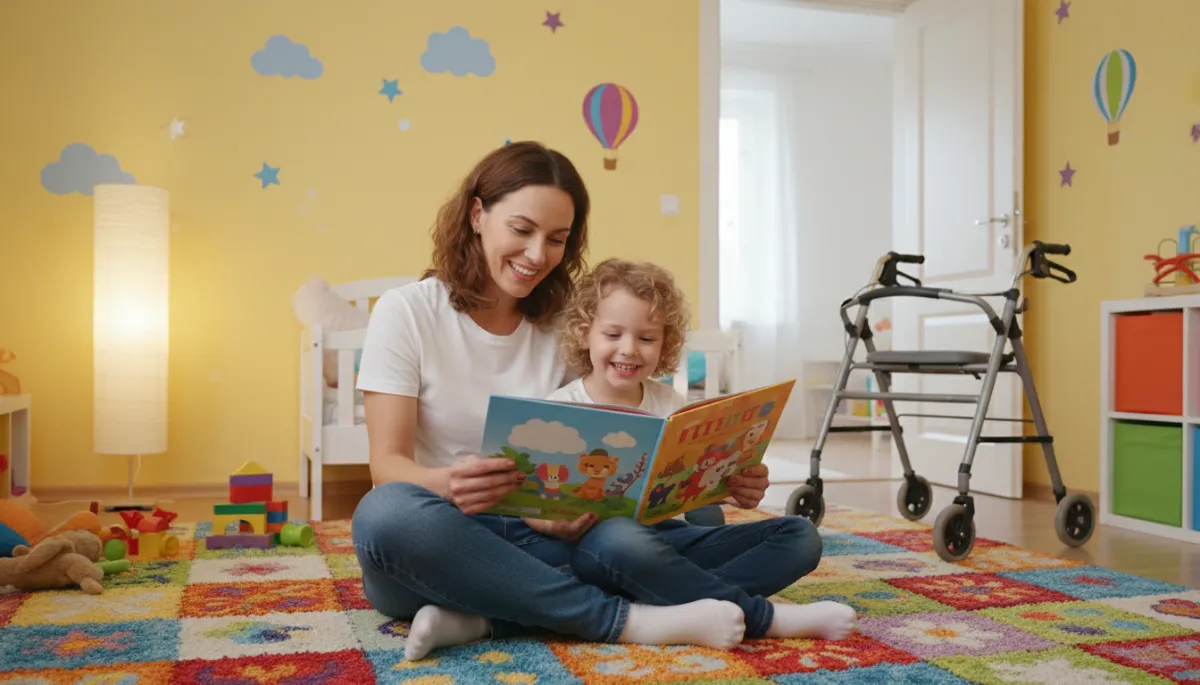
Simple nightly rituals can become a child’s strongest source of security and calm.
Reconnecting With Kids When You Feel Disconnected or Guilty
If you’re reading this and thinking, “I’ve been so busy, I don’t even know where to start,” take a breath. Reconnecting with kids doesn’t require a perfect script or a grand gesture. It starts with honest, age-appropriate conversations and small, consistent actions that rebuild trust and closeness over time. Children are remarkably forgiving when they feel seen and included in what’s happening around them.
You might begin by naming what’s been hard: “I’ve been spending a lot of time helping Nana because she’s not feeling well. I know that means I haven’t had as much playtime with you, and I’m really sorry if that’s felt lonely or confusing.” This kind of gentle honesty validates their experience and opens the door for them to share. Then you can invite them into a plan: “I want to make sure we still have special time together. How about we start a ten-minute ‘just us’ time after dinner every night?” Reconnecting with kids is less about fixing the past and more about creating new patterns going forward.
💡 Connection Phrase to Try: “Your feelings make sense to me. Thank you for telling me. I’m so glad we’re talking about this.”
Emotional Support for Children in Caregiving Seasons
Kids don’t need all the medical details, but they do need emotional support during caregiving seasons. That support often looks like helping them name their feelings, giving them simple, honest explanations, and reassuring them about what will and won’t change. When children understand that a loved one is sick or needs extra help—and that adults are working together to care for them—they often feel less afraid and less alone.
Name the feelings: “It seems like you’re feeling sad and maybe a little mad that I have to help Grandpa so much. Is that right?” Naming emotions helps kids feel understood instead of “bad” for their reactions.
Offer simple explanations: “Grandma’s body is having a hard time working the way it used to. The doctors and I are helping her, and she loves you very much.”
Reassure their place: “Even when I’m busy, you are always my child, and I love you more than anything. That never changes.”
Emotional support for children also means giving them safe outlets for expression—drawing, journaling, storytelling, or using tools like the KidsCaregiver Collection/Series and Companion to guide conversations. When kids have structured ways to share their thoughts and questions, they’re less likely to carry their worries alone or act them out in confusing ways.
Creating Connection Rituals With the KidsCaregiver Collection/Series and Companion
When your brain is full of appointments, medications, and logistics, it can feel overwhelming to dream up new ways to connect with your kids. That’s where having a gentle, ready-made guide can make a big difference. The KidsCaregiver Collection/Series and Companion is designed specifically for families walking through caregiving seasons, helping you turn ordinary moments into meaningful connection rituals without adding more mental load to your plate.
Instead of starting from scratch, you can use the prompts, stories, and activities in the KidsCaregiver Collection/Series and Companion as a simple framework for ten-minute connection pockets. For example, you might open the Companion and choose:
A short question to ask at dinner about how your child is feeling today
A simple drawing or journaling prompt to do together after school
A bedtime reflection you can read aloud when you tuck them in
Over time, these small, guided moments become your family’s own connection rituals. Your child learns, “Even when Mom or Dad is busy caregiving, there are special times that are just for us.” And you get the comfort of knowing you’re offering emotional support for children in a way that’s manageable and sustainable, not one more thing you have to figure out alone.

Guided prompts make it easier to turn ten free minutes into true connection.
Support for Caregivers: You Deserve Care, Too
It’s impossible to talk about children feeling neglected without also talking about support for caregivers. You are human, with a limited amount of time and energy. When every day feels like a race between caring for your loved one, showing up for your kids, and somehow keeping the rest of life running, burnout is a real risk. Offering emotional support for children is so much easier when you have even a little bit of support yourself—whether that’s practical help, emotional encouragement, or tools that simplify your role.
The KidsCaregiver Collection/Series and Companion was created with you in mind. It recognizes that caregivers need clarity (What do I say? How do I explain this?), confidence (Am I doing this right?), and purpose (How do I make this season meaningful, not just stressful?). Instead of leaving you to guess, it offers gentle, practical guidance so you don’t have to carry everything in your head. That kind of support for caregivers doesn’t erase the hard parts, but it can make them feel more manageable and less lonely.
💡 Remember: Taking care of yourself is one of the best ways to take care of your kids. When you feel even a little more grounded, it becomes much easier to offer calm, steady presence to the children who look up to you.
Turning Ordinary Moments Into Meaningful Family Time
One of the biggest myths about family life is that meaningful family time has to be big, elaborate, and Instagram-worthy. In caregiving seasons, that expectation can feel especially heavy. The good news is that your child’s heart doesn’t measure love in fancy outings; it measures love in presence, attention, and warmth. The question isn’t, “How much can we do?” but rather, “How can we bring a sense of togetherness into what we’re already doing?”
Turn chores into connection: Fold laundry together while you ask silly “would you rather” questions from a KidsCaregiver prompt or make up a story together about the socks.
Bring kids into caregiving in gentle ways: Let them draw a card for the person you’re caring for, help choose a favorite song to play, or join you for a short visit with clear expectations. This can transform “time away from them” into “something we’re doing as a family.”
Create mini-celebrations: A “Friday night snack picnic” on the living room floor, a “silly sock day” when everyone wears mismatched socks, or a weekly “family gratitude circle” can bring lightness and joy, even in heavy seasons.
Tools like the KidsCaregiver Collection/Series and Companion can spark these ideas for you, offering simple, doable suggestions that fit into real life. You don’t have to reinvent the wheel every day; you just have to keep rolling forward, one small, meaningful moment at a time.

Shared activities turn caregiving from a solo burden into a family story of togetherness.
KidsCaregiver Collection/Series and Companion: A Gentle Guide for Your Whole Family
When you’re in the thick of caregiving, it’s easy to feel like you’re constantly reacting—putting out fires, responding to needs, and hoping you remember everything that matters. The KidsCaregiver Collection/Series and Companion is designed to help you shift from just surviving to creating intentional, meaningful experiences with the children you love, even in the middle of the chaos. It gives you language, prompts, and activities that are developmentally sensitive and emotionally grounded, so you’re never starting from a blank page when it’s time to connect.
Most of all, KidsCaregiver Collection/Series and Companion helps caregivers create clarity, confidence, and purpose during caregiving seasons. Clarity, because you’ll have simple, age-appropriate ways to explain what’s happening and support your child’s feelings. Confidence, because you’ll know you’re not forgetting their emotional world, even when your schedule is packed. And purpose, because you’ll see how this challenging chapter can also be a time of deep bonding, empathy, and growth for your entire family.
If you’re longing for more ease and intention as you navigate caregiving challenges and children feeling neglected, this resource can be a steady companion by your side. You don’t have to figure it all out alone, and you don’t have to wait for life to calm down before you start reconnecting with kids in small, powerful ways.
A Warm Invitation to Your Next Small Step
If you’ve been worried about children feeling neglected while you juggle caregiving challenges, consider this your gentle permission slip to start small. You don’t need a perfect plan or endless free time. You just need a few focused minutes, a willingness to listen, and a simple tool to guide you when words are hard to find. The KidsCaregiver Collection/Series and Companion is here to make that easier, turning everyday moments into meaningful family time and giving your kids the emotional support they need to feel loved, included, and secure.
KidsCaregiver Collection/Series and Companion helps caregivers create clarity, confidence, and purpose during caregiving seasons. If you’re ready to explore gentle, practical ways to support both your loved one and the children who share your heart, you’re warmly invited to learn more. Visit https://kidscaregivercollection.com/ to discover how this thoughtful resource can walk with you, one small, meaningful moment at a time.
