
Hospital Visits and Kids: How to Prepare Without Scaring Them
Parenting, Hospital Visits, Child Anxiety
Hospital Visits and Kids: How to Prepare Without Scaring Them
Hospital visits can feel big and intimidating for children and caregivers alike. With a little planning, honest conversation, and plenty of comfort, you can turn a potentially stressful hospital experience into something your child can handle with confidence—and even a bit of curiosity.
Why Hospital Visits Feel So Big to Kids
For adults, a hospital visit is usually about logistics—appointments, paperwork, and treatment plans. For kids, it’s a whole different world: bright lights, new people in uniforms, unfamiliar machines, and sometimes uncomfortable procedures. When we understand child anxiety around medical settings, we can respond with empathy instead of pressure or “you’ll be fine” dismissals.
Children are experts at sensing tension. If a caregiver is worried, rushing, or speaking in hushed tones, kids quickly pick up the message that something scary might be happening. That’s why thoughtful children preparation for hospital visits matters so much: it gives kids a sense of predictability and control, even when they can’t choose whether they go to the hospital or what happens there.
💡 Gentle Reminder: Feeling nervous about a hospital visit is normal—for kids and adults. Your calm, warm presence is one of the strongest tools you have.
Step One: Prepare Yourself Before You Prepare Your Child
Effective caregiver support starts with you feeling as informed and grounded as possible. Before you begin explaining the hospital visit to your child, take a moment to prepare yourself:
Ask the medical team what will happen during the visit, in simple steps.
Clarify how long you’ll likely be there and whether you can stay with your child the entire time.
Check if there are child life specialists, playrooms, or special programs that support kids’ hospital experiences.
When you have a clear picture, it’s easier to answer questions honestly without overwhelming your child. Think of yourself as a calm guide—a kind of Kidscaregiver Companion—walking alongside your child through each step of the hospital experience.
Honest, Gentle Conversations: What to Say (and What to Skip)
Match the Details to Your Child’s Age
Good children preparation doesn’t mean giving every medical detail. It means offering just enough information so your child knows what to expect. A simple rule: younger kids need short, concrete explanations; older kids and teens may want more detail and a chance to ask deeper questions.
Toddlers (1–3 years): Focus on what they will see and feel right before it happens: “We’re going to see the doctor. I’ll be with you. The doctor might look in your ears and listen to your chest.”
Preschoolers (3–5 years): Use simple stories: “We’re going to the hospital so the helpers there can check your body and help it feel better. You might wear a soft bracelet and lie on a special bed with wheels.”
School-age children (6–12 years): Offer more detail and invite questions: “The nurse will put a small band around your arm to check your blood pressure. It feels like a tight hug, not a pinch.”
Teens: Treat them as partners in their care. Share the plan, ask what they want to know, and involve them in decisions when possible.
Use Clear, Non-Scary Language
It’s tempting to say “It won’t hurt” or “It’s no big deal,” but kids remember those promises. If something does hurt, they may feel tricked. Instead, acknowledge that some parts might be uncomfortable while emphasizing that they are short and that you’ll be there the whole time. For example:
“You might feel a quick pinch, and then it’s over.”
“You may hear beeping sounds, but those are just the machines talking to the nurses.”
💡 Pro Tip: Avoid words like “shot,” “needle,” or “cut” if they make your child tense. Instead, use softer phrases like “medicine straw,” “tiny straw,” or “small opening” while still being truthful about what they’ll feel.
Practical Ways to Reduce Child Anxiety Before the Visit

Scene of parent and young child sitting on colorful bedroom rug, reading a hospital-themed...
Story-based play helps children rehearse and feel safer about hospital visits.
Play It Out at Home
Play is a powerful way to prepare kids for new experiences. Turn your living room into a pretend clinic and let your child be the doctor, nurse, or patient. Use toy stethoscopes, bandages, or even a favorite stuffed animal as the “patient.” This kind of role-play turns unknowns into something familiar and manageable, easing child anxiety long before you walk into the hospital.
Use Books, Videos, and Visuals
Many children’s books gently introduce hospital visits, surgery, or imaging tests with friendly characters and bright illustrations. Short, age-appropriate videos from children’s hospitals can also demystify the environment. Watch or read together and pause often to ask:
“What do you notice about the hospital in this story?”
“How do you think the child in the book feels? What helps them feel better?”
Practice Coping Skills Together
Simple coping tools can make a big difference to your child’s hospital experience. Practice them at home when everyone is calm, so they’re familiar during the actual visit:
Balloon breathing: “Let’s blow up an invisible balloon—slow breath in through your nose, then blow out through your mouth.”
Counting: “We’ll count the ceiling tiles, the stickers on your bracelet, or the dots on the wall together.”
Comfort objects: Choose a favorite stuffed animal, blanket, or small toy that becomes their “hospital helper.”
💡 Pro Tip: Give the comfort item a job—“Bunny’s job is to help you feel brave and keep you company.” This small shift can empower your child and reduce anxiety.
What to Pack for a Child-Friendly Hospital Experience
A little preparation can turn a sterile room into a more comforting space. Think of your hospital bag as a portable toolkit for easing child anxiety and supporting both of you during the visit.
Comfort and familiarity: Favorite pajamas, a small pillowcase from home, a beloved stuffed animal or doll, and a family photo.
Distraction tools: Coloring books, sticker books, simple games, headphones with music or audiobooks, and a fully charged tablet if allowed.
Snacks and drinks: If approved by the care team, familiar snacks can be comforting. Always check fasting rules before offering food or drinks.
Caregiver support items: A light sweater, phone charger, a small notebook for questions, and a water bottle for yourself.
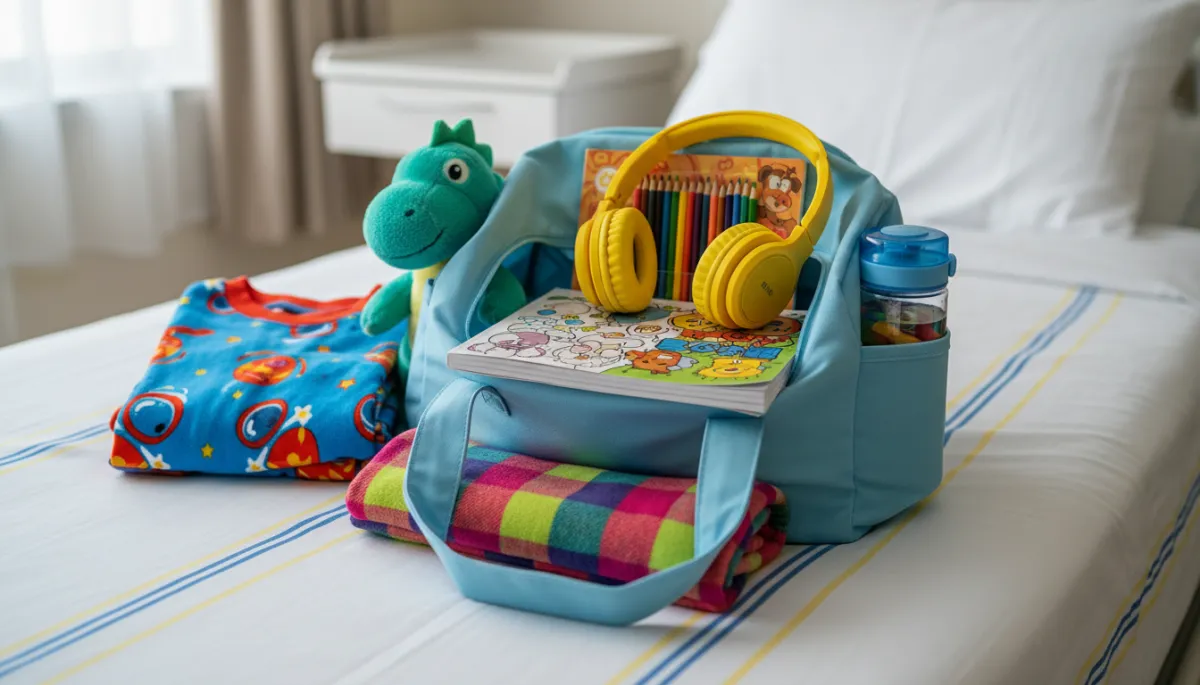
Close-up of an open hospital bag on a bright bed, neatly packed with a child’s pajamas, stuffed...
Familiar items from home can soften the hospital environment and calm nerves.
During the Visit: Being Your Child’s Calm Companion
Partner with the Care Team
You know your child best. Share what helps them feel safe: Do they prefer to sit on your lap? Do they like to watch or look away during procedures? Are they sensitive to noise or bright lights? Most pediatric teams welcome this input and see you as an essential part of the care plan—a real-life Kidscaregiver Companion helping them shape a better hospital experience for your child.
Stay Present, Even If You’re Nervous
You don’t have to be perfectly calm to help your child. You just need to stay connected. Simple, reassuring phrases can go a long way during stressful moments:
“I’m right here with you.”
“Let’s take three slow breaths together.”
“You’re doing such a brave job. This part will be over soon.”
Physical touch—holding hands, a gentle hug, or a hand on their shoulder—can also be grounding. Ask your child what feels most comforting to them and follow their lead.
Use Distraction Wisely
Distraction doesn’t mean ignoring your child’s feelings; it means giving their brain something else to focus on during the hardest moments. Depending on your child’s age and interests, you might:
Sing a favorite song together or hum quietly.
Tell a silly story and let your child add details: “What color should our dragon be?”
Play “I Spy” with things in the room or on their clothing.

Pediatric hospital room where caregiver sits beside child on bed, both smiling and looking at a...
Simple distractions like games or videos can ease tense moments during care.
After the Visit: Helping Your Child Process the Experience
Once you’re home, your child may have big feelings about the hospital visit—relief, confusion, anger, or pride. Giving them space to talk (or play) about what happened helps prevent lingering child anxiety about future hospital visits.
Invite the Story—In Their Own Way
Some kids like to talk; others prefer to draw or act out their hospital experience with toys. Follow their style. You might say:
“What’s one thing you remember most about the hospital?”
“Was there anything that surprised you?”
Validate their feelings, even if they’re hard to hear: “It makes sense you felt scared when the machine was loud,” or “I hear that you didn’t like waiting so long. Waiting was hard for me too.”
Celebrate Their Courage
Highlighting your child’s strengths can reshape how they remember the hospital experience. You might create a “bravery certificate,” draw a small star on the calendar, or simply say at bedtime, “You did something really hard today, and I’m proud of how you handled it.”
💡 Gentle Reminder: Courage isn’t the absence of fear—it’s doing something even while feeling nervous. Help your child see themselves as capable, not helpless.
When Hospital Visits Are Ongoing or Long-Term
For some families, hospital visits are not one-time events but a regular part of life. In these situations, caregiver support and consistent routines become even more important. Over time, children may feel worn out or more anxious, especially if they associate the hospital with pain or separation from friends and school.
Keep as many familiar routines as possible—bedtime stories, favorite songs, or morning rituals—even in the hospital room.
Use video calls so siblings and friends can check in, helping your child feel connected to life outside the hospital.
Ask about support services such as child life specialists, social workers, or counselors who are trained to help families navigate long-term care.

Long-term pediatric hospital room with child sitting up in bed doing a craft activity with a...
Creative activities and routines bring normal life into the hospital setting.
Taking Care of You: The Heart of Caregiver Support
It’s hard to be calm and reassuring when you’re exhausted, hungry, or overwhelmed. Yet that’s exactly what many caregivers face during hospital visits. Remember: taking care of yourself is not selfish—it’s part of taking care of your child. Even small acts matter:
Step into the hallway for a few deep breaths while a trusted adult or nurse stays with your child, if possible.
Accept help from friends or family with meals, rides, or childcare for siblings.
Keep a small list of questions on your phone so you don’t have to hold everything in your head.
You are your child’s steady presence and their closest source of comfort. Treat yourself with the same kindness and gentleness you offer them. That’s the foundation of real, sustainable caregiver support.
Bringing It All Together: A Kinder Hospital Experience for Kids
Hospital visits will probably never be your child’s favorite activity—and that’s okay. The goal isn’t to erase every worry; it’s to prepare them without scaring them, to help them feel informed rather than overwhelmed, and to surround them with support at every step. With thoughtful children preparation, honest conversations, and a focus on emotional as well as physical comfort, you can transform a daunting hospital experience into one that builds trust and resilience.
As you plan your next hospital visit, remember that you don’t have to do everything perfectly. You simply need to show up—with your presence, your patience, and your willingness to listen. In many ways, being your child’s Kidscaregiver Companion is about exactly that: walking beside them, hand in hand, through the unfamiliar, and helping them discover that even in a hospital, they are safe, seen, and deeply loved.
