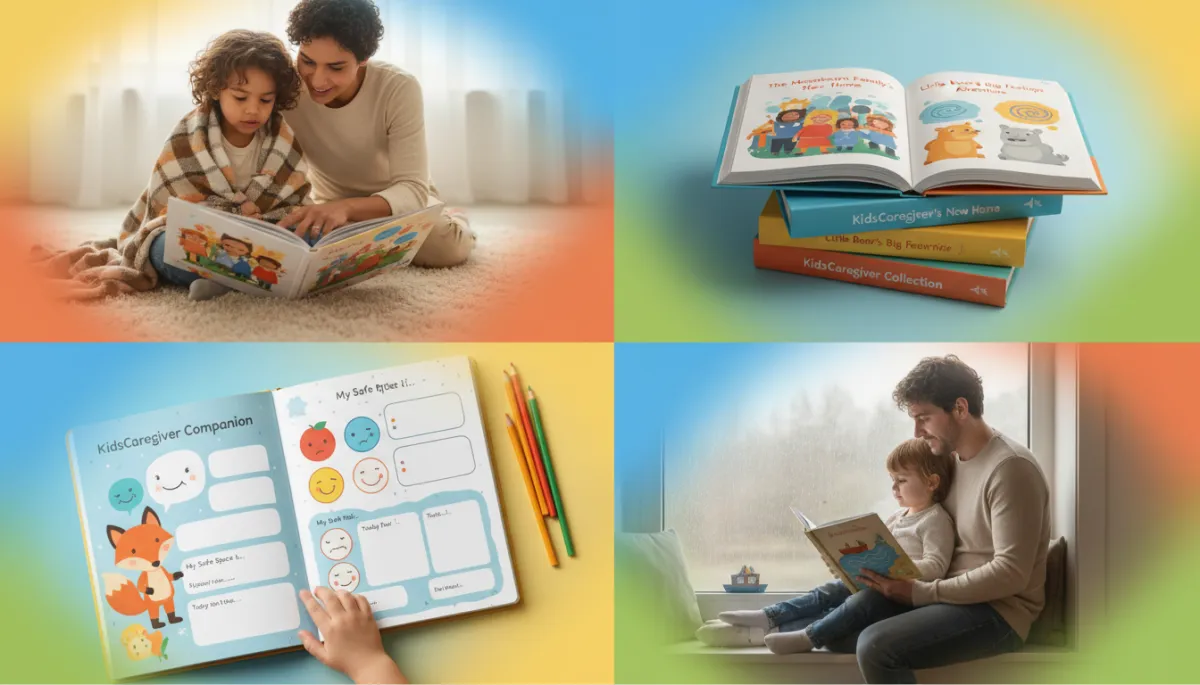
How Storybooks Help Children Process Hard Family Seasons
Storybooks, Children's Emotional Support, Family Challenges, Caregiver Resources, Processing Feelings, Kidscaregiver Companion
How Storybooks Help Children Through Hard Family Seasons
When family life gets hard, adults usually reach for words: we talk, we text friends, we journal, we look for articles or podcasts. Children, though, reach for something different. They reach for stories. In the middle of big changes, scary news, or everyday stress, storybooks can become a gentle lifeline—offering comfort, children's emotional support, and a safe place to start processing feelings.
This is where resources like the KidsCaregiver Collection and the KidsCaregiver Companion shine. They are designed to support caregivers and kids side by side, turning tough family moments into shared reading moments that heal, reassure, and connect. In this article, we’ll explore how storybooks help children navigate family challenges, why they matter so much, and how you can use them as simple, powerful caregiver resources in your home.
Why Storybooks Matter So Much During Hard Seasons
Children experience the same storms adults do—illness in the family, divorce, financial stress, a new baby, moving, or the loss of someone they love. But they don’t have the same tools we do to make sense of it all. That’s where storybooks come in. A good story quietly says, “You’re not alone. Other kids have felt this way too. Let’s walk through it together.”
Stories give children something incredibly valuable: a way to see their feelings outside of themselves. When a character in a book worries about a parent in the hospital, or feels confused about two homes after a separation, a child can think, That’s me—without having to say it out loud right away. This gentle distance makes big emotions feel a little safer and a little less overwhelming.
💡 Friendly Tip: If you’re not sure what to say about a tough topic, start by saying, “Let’s read a story about another kid who went through something like this.” Let the book open the door for you.
Storybooks as Emotional Support: A Soft Place to Land
One of the most powerful roles of storybooks is providing quiet, steady children's emotional support. Think of a picture book as a tiny emotional first-aid kit: it doesn’t fix the whole situation, but it can soothe, stabilize, and give a child something solid to hold onto when everything else feels wobbly.
Stories offer reassurance: “This is hard, but you’re still loved and safe right now.”
They model coping: characters cry, ask questions, talk to grown-ups, or find comforting routines.
They validate emotions: sadness, anger, confusion, and even relief all show up as normal and allowed.
The KidsCaregiver Collection is built with this kind of support in mind. Each story is crafted to walk alongside kids during specific family challenges—such as a parent’s serious illness, long work hours, or big transitions at home. Instead of rushing past the hard parts, these books linger in them, showing children that their feelings make sense and that caring adults are right there with them.
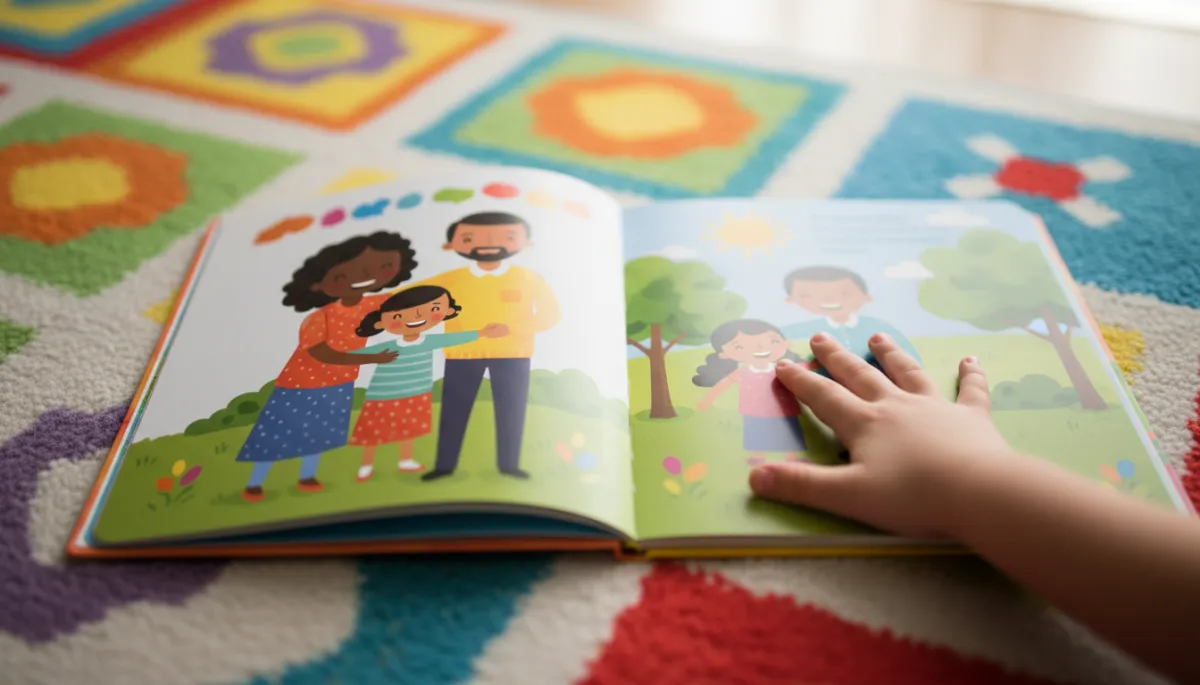
When kids see their feelings reflected in a story, those feelings feel less lonely and scary.
Creating a Shared Language for Big Feelings
One of the hardest parts of parenting through a tough season is figuring out how to talk about it. What words do you use for a cancer diagnosis, a deployment, or a painful separation? How do you explain anxiety, sadness, or anger in a way that fits a child’s world? Storybooks can help by creating a simple, shared language you and your child can both lean on.
When a book describes a character’s “worry cloud” or “tummy knots,” you suddenly have phrases you can borrow in everyday life. You can say, “Are you feeling a little worry cloud today?” or “Does your tummy feel knotted like the kid in our book?” This shared language makes processing feelings feel more concrete and less mysterious. It also reminds your child that you’re paying attention and that you remember what’s hard for them.
The KidsCaregiver Companion is especially helpful here. It’s designed as a guide for adults who want to use storybooks to support kids but might feel unsure where to start. The Companion offers discussion prompts, simple explanations, and suggested phrases you can repeat with your child. Over time, these words become a kind of “family language” around feelings—one that says, “We can talk about hard things here.”
💬 Try This: After reading, ask: “What word from this story should we keep using in our family when things feel tough?” Write it on a sticky note and put it on the fridge.
Normalizing Experiences: “It’s Not Just Me”
When something big and hard is happening at home, children often quietly wonder, Is this my fault? or Is this happening only to us? They may not say those words out loud, but you can often see the worry in their behavior: clinginess, acting out, shutting down, or trying to be “too perfect.” One of the most healing gifts a story can offer is the simple message: This happens to other kids too. You are not weird, and your family is not broken.
When a child sees a character whose parent is sick, or who splits time between two homes, or who worries about money, it normalizes their own experience. It doesn’t make the situation easy, but it makes it understandable. This kind of normalization is especially important for kids who might not know any peers going through something similar. A book can quietly become the “friend” who says, “Me too.”
The KidsCaregiver Series does this beautifully by portraying a wide range of families—different cultures, different setups, different challenges—so more children can see themselves on the page. These stories don’t shy away from real-life pain, but they also highlight resilience, love, and everyday moments of joy. That balance helps kids understand that their story is more than just the hard part; it’s also full of care, creativity, and connection.
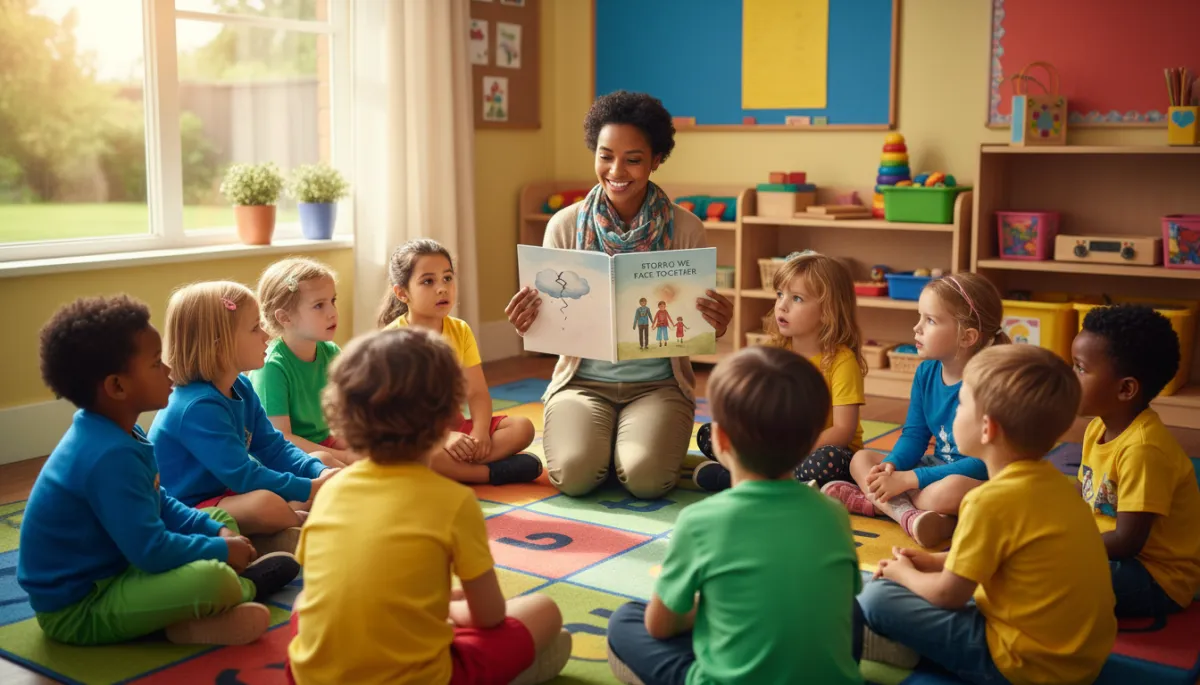
Seeing other families face challenges on the page helps kids feel less alone in their own story.
Slowing Down Moments for Emotional First Aid
Hard seasons tend to speed everything up. There are appointments, phone calls, paperwork, schedules to juggle, and emotions running high. In the rush, it’s easy for a child’s inner world to get lost in the shuffle. Reading together is one of the simplest ways to press a gentle “pause” button—to slow down a moment and offer what we might call emotional first aid.
When you sit down with a storybook, you’re sending several quiet messages at once:
You matter enough for my full attention. Even if it’s just ten minutes, that focused time is deeply regulating for kids.
We can go slowly. You can linger on a page, reread a sentence, or just sit quietly with an illustration.
Your feelings are welcome here. Tears, questions, silence, and even giggles are all okay during storytime.
The KidsCaregiver Companion encourages this slow, intentional approach. It offers simple guidance like, “Pause on this page and ask your child what they notice,” or “If your child doesn’t want to talk, that’s okay—just keep reading.” These prompts remind caregivers that the goal isn’t to fix everything in one conversation. The goal is to create many small, safe moments where healing can begin.
⏸ Gentle Pause Idea: After a particularly intense day, say, “Let’s take a story break together.” Pick a book from the KidsCaregiver Collection, make a snack, and let the rhythm of reading help everyone’s shoulders drop a little.
Supporting Caregivers and Children Through Stories
It’s important to say this out loud: hard seasons are hard on caregivers too. You may be carrying your own grief, fear, or exhaustion while trying to be steady for your child. Storybooks, especially those created as caregiver resources, are not just for kids—they’re for you as well. They offer structure, language, and a gentle script when your brain and heart are already doing so much.
The KidsCaregiver Collection and KidsCaregiver Companion are designed with this dual support in mind. The stories speak directly to children, while the Companion quietly supports the adult reading beside them. It might suggest how to answer common questions, how to respond if your child shuts down, or how to circle back to a topic later if tonight just isn’t the right moment. In this way, the books become partners in your caregiving—not another “to-do” on your list, but a tool that lightens the emotional load a bit.

Caregiver tools like the KidsCaregiver Companion make hard conversations feel less overwhelming and more guided.
Practical Ways to Use Storybooks During Family Challenges
If you’re wondering how to begin, you don’t need a perfect plan. Start small and stay gentle with yourself. Here are a few simple ways to weave storybooks into your family’s rhythm when life is heavy:
Create a “Feelings Shelf.” Choose a few books from the KidsCaregiver Series and other favorites that speak to emotions and processing feelings. Keep them in one easy-to-reach spot so your child can grab them anytime.
Use books as conversation starters. After reading, ask open questions like, “What part of this story felt a little like our family?” or “Did any feelings in this book feel familiar to you?”
Return to the same story often. Children process in layers. A book from the KidsCaregiver Collection might spark different reactions over time as your child’s understanding deepens.
Let your child lead. If they want to talk, listen. If they just want to cuddle and turn pages, that’s valuable too. Silence doesn’t mean the story isn’t working; it may mean they’re thinking and feeling quietly.
Use the KidsCaregiver Companion. Before or after reading, glance at the Companion for ideas. It can help you feel more confident and less alone as you walk through these conversations.
When You Don’t Have the “Right” Words, Let the Story Speak
Many caregivers worry about saying the wrong thing, or not saying enough. You might wonder, What if I make it worse? The gentle truth is that your presence matters far more than your perfect wording. By reaching for a book—especially one thoughtfully created for children's emotional support—you’re already giving your child something powerful: time, attention, and a shared path into the hard stuff.
The KidsCaregiver Collection and KidsCaregiver Companion exist to walk that path with you. They help you:
Offer emotional support through gentle, relatable stories.
Build a shared language around big feelings and family challenges.
Normalize your child’s experiences so they don’t feel so different or alone.
Slow down busy, stressful days for moments of emotional first aid and connection.
A Gentle Invitation to Your Next Storytime
If your family is walking through a hard season right now, you don’t have to have all the answers. You don’t have to explain everything perfectly or stay strong every moment. What you can do—today, tonight, this week—is choose one story, sit close, and let the pages do some of the talking for you.
Maybe that story comes from the KidsCaregiver Series, carefully written to meet families in exactly these kinds of moments. Maybe you keep the KidsCaregiver Companion nearby, like a quiet friend whispering, “Here’s one way you could say that,” or “Here’s a question you might ask.” However you begin, remember that every shared story is a small act of care—for your child and for you.

Bedtime stories can become daily rituals of emotional first aid and connection during hard seasons.
Storybooks won’t erase the hard things your family is facing. But they can soften the edges, slow the pace, and remind everyone in the room that even in the middle of uncertainty, you are still together, still loved, and still allowed to feel exactly what you feel. That is the quiet, powerful promise of stories—and it’s one your child can carry with them long after the book is closed and the lights are out.
